A hand rolling orange ink across the roller of a printing press
  1. Home
  2. Magazines & print

Magazines & print

The thing
nobody else
will make you.

Company magazines, capability brochures and tender documents — written, art-directed, printed and delivered on a pallet.

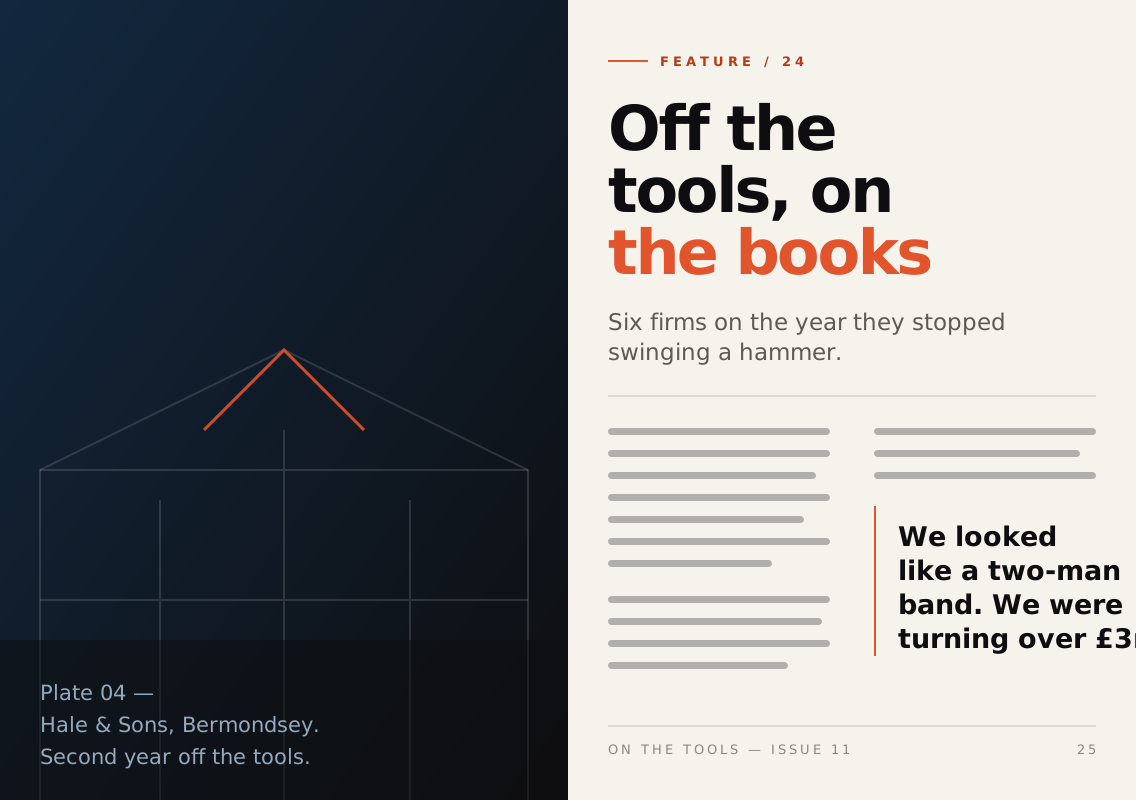
An inside spread: a full-bleed photograph on the left page, and on the right a feature opener headed ‘Off the tools, on the books’ with two columns of body text and a pull quote.
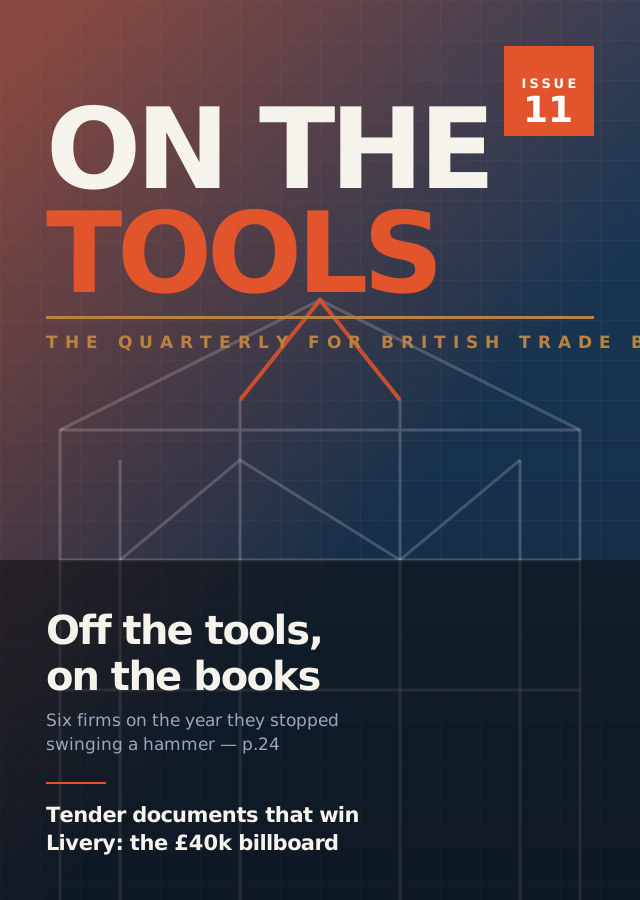
Magazine cover: On The Tools, issue eleven, the quarterly for British trade business.

On The Tools, issue 11 — 48pp, 170gsm silk, perfect bound. Scroll to open.

01Why print

A website is something people leave. A magazine is something they put down and pick up again.

Print stopped being fashionable about fifteen years ago, which is precisely why it works now. Everyone in your sector is competing for the same eleven seconds of attention on the same four platforms. Almost nobody is putting a properly made object into a client’s hands.

In construction the effect is stronger than in most industries, because the buying cycle is long and the decision is made by a committee you never meet. A capability document sits in a site office. It gets read by a quantity surveyor at lunchtime. It travels to a meeting you were not invited to.

It also does something a website cannot: it proves you can be bothered. Anyone can buy a template. Almost nobody commissions a magazine.

02What we make

Four kinds
of paper.

Each does a different job. Most clients start with the second and grow into the first.

01

Company magazine

32–48 pages, quarterly or twice a year. Your projects, your people, and enough genuinely useful editorial that people read it rather than bin it.

  • Editorial planning & commissioning
  • Interviews and writing
  • Photography direction
  • Print management & distribution
02

Capability statement

8–16 pages. What you do, what you have built, who vouches for you, and every accreditation in one place. The thing you send within an hour of being asked.

  • Sector and service breakdown
  • Project sheets
  • Accreditations & insurances
  • Print and PDF versions
03

Tender & PQQ set

Templates your office fills in themselves, so every submission looks like it came from the same firm — because it did.

  • InDesign and Word templates
  • Standard project sheets
  • Method statement layouts
  • Training for whoever compiles them
04

Project books

A single job, documented properly, at handover. Clients keep these for years and show them to the next person who asks who did the work.

  • Before, during and after photography
  • Drawings and details
  • Short-run printing
  • Case-bound or saddle-stitched
03Selected print
Hands turning the pages of a large-format architecture magazine
Fig. 01Perfect bound, 170gsm silk. Made to be handled.
A stack of magazines with restrained cover typography, shot from above
Fig. 02Covers that hold up on a site-office table.
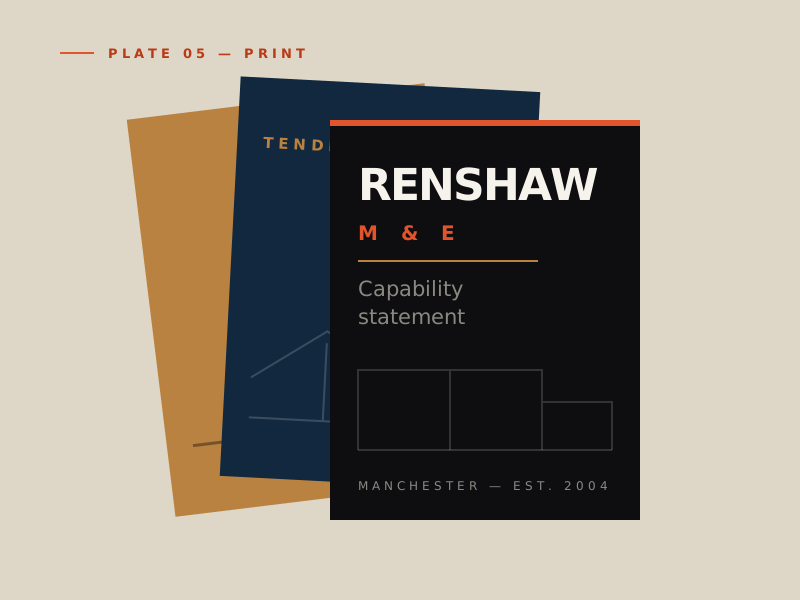
Capability statement and tender documents for Renshaw M and E, fanned to show three covers.
Fig. 03Renshaw M&E — capability statement and tender set.
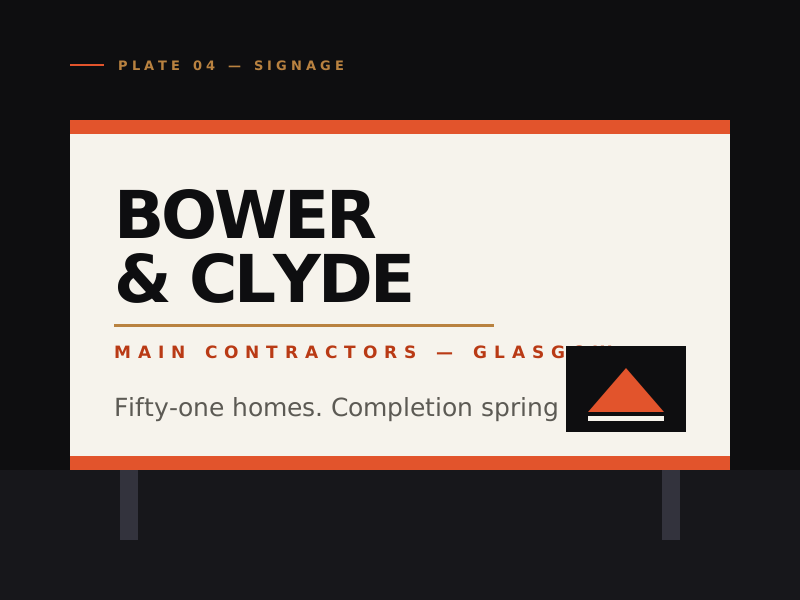
Large-format site hoarding for Bower and Clyde main contractors.
Fig. 04Bower & Clyde — hoardings, large format.
04How a magazine gets made
  1. 01

    Editorial meeting

    We sit down with you and work out what is worth writing about. Usually more than you think.

    Week 1
  2. 02

    Commission & shoot

    Interviews recorded, copy written, photography briefed and shot on site.

    Weeks 2–3
  3. 03

    Art direction

    Pages designed, a first-proof PDF for you to mark up, then amends.

    Weeks 4–5
  4. 04

    Press

    Stock specified, wet proof approved, printed and delivered. We handle the printer.

    Week 6

From £9,500 per issue plus print, for a 32-page run of 1,000. Print is quoted separately and at cost.

Got something worth printing?

Let’s talk
about paper.

Even if it turns out you only need a capability statement, the conversation is free and we will tell you straight.

Book a call